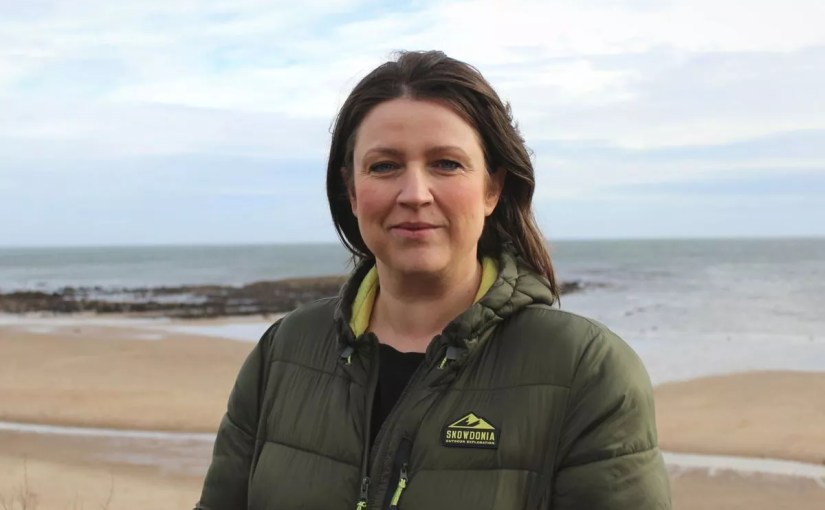
Maria Albertsen – A True Great

I still can’t believe I am writing this. Since hearing the news of Maria’s death last week, I have been reflecting deeply on her life, her immense and unparalleled impact on our profession, and on our friendship. I am simply heartbroken for her lovely children – she was an incredibly dedicated parent and her untimely loss is an unimaginable tragedy for her family.

As a leading activist in the counselling profession, Maria achieved things that I didn’t think were possible. She gave a voice and courage to working class therapists and aspiring therapists. She taught us that we all have a place here, and that we do not have to accept the deep injustices that run throughout the profession. She taught us that we can make real, tangible change – she was the driving force behind campaigns which have altered the course of membership bodies’ policy decisions and advertising of unpaid work. She was the creator of Counsellors Together UK the largest activism group in the UK therapy world, and the founder of National Counsellors Day – a simply huge annual event for counsellors across the country. And she never stopped. She was always planning the next thing. She developed CPD, coaching, reflective spaces, developed funding for retreats for therapists on low incomes, and constantly, constantly, had her eye on professional politics. She had the ability to hold so much information in her head, and make connections that anybody else would miss. She would send me obscure documents with triumphant voice notes explaining how this document proved we were moving in the right direction. Her tenacity was surpassed only by her ingenuity and compassion. She was the perfect ally and the perfect friend.

Our backgrounds were similar in some ways. We’d share stories about growing up on northern, working class estates in the 80s and 90s. We shared a lot of values, especially when it came to the fight for marginalised people (and telling Tories to fuck off, of course). We laughed a lot. A lot, a lot. It is hard for me to imagine ever having as much fun in the therapy activism world without her to share the laugh with.

Back when I started talking about Harm in Therapy, CTUK was the only organisation who would platform me. My invite to National Counsellors’ Day was the first time anyone had been willing to put the topic front and centre of a therapy conference. Now, the conversation is growing exponentially. Most of the time, Maria is not credited for that, but she should be. Maria, like so often she did, went where others were unwilling to go. She was fearless.

She knew everything. About professional politics, the MBs, the activism world, all aspects of the profession. She was told things. And why? Because she was so immensely likeable. Everybody who actually knew her, liked her a lot. Her detractors never knew her, they distanced themselves from her because they feared her. And they feared her because her fight for the little guy did not align with the normative agendas that protect status and ringfence power for the elite. She dismantled those barriers because she knew they were phony. And she proved that they were. We mustn’t forget that lesson in her absence.

Her impact on this profession is immense and permanent. She has changed us. Not only those of us that knew her, but the profession as a whole, it is permanently altered by her contribution. Every social justice conference, every policy change, every conversation about poverty, unpaid work, wages and inequity had their way paved by the work of Maria Albertsen. Her legacy will impact future therapists who haven’t even thought of training yet. And clients who haven’t even thought of accessing therapy yet.

Earlier this year, Maria told me that her job was to get people talking. She said that she felt her role was to make space for these conversations about injustice and inequity to happen (because it is harder to ignore an issue that is conscious to us). She said to me: “In 2017, hardly anyone talked about unpaid work or the issues around it. And now it’s talked about all day, every day. Imagine if we can do the same about poor clients/poverty”. She wanted us to talk and keep talking. Not to let injustice be brushed under the carpet. She wanted us to make sure that membership bodies could not shy away from the inequity in access to therapy, or the impact of national politics on the wellbeing of clients. She spoke with courage about her own experiences with the DWP, and called for change. It is for us now to talk. It is for us to have conversations, with each other, with our membership bodies, with our supervisors, with politicians, and with the world. Maria wanted us to keep talking and we will.

Her influence will be with me throughout my career and my life. I shall never forget her, or her passion for change. Our profession must always carry her passion with us. Now and forever.


Can Effective Supervision Prevent Harm in Therapy?

Philip Cox’s recent article on harm in therapy got me thinking about the value of the supervision I seek, and my relationship with my supervisor. I like the notion that the word supervision literally means “over-view” and I can picture my supervisor in a little helicopter, observing the wider picture as I manage the finer details on the ground.

So what is the purpose of supervision? For me, the supervisory relationship serves several functions.

Firstly, I have a trusted and confidential space to discuss my work with clients, which feels like an essential counterbalance to the isolating nature of the work which is so often talked about in the profession. It is in itself a form of self-care.

Secondly, I find the strength of the relationship provides a solid platform on which I know I can stand when I need to. I feel confident it will not break beneath me. This security gives me the courage to co-create new platforms with my clients, on which they too can stand and experience safety within the relationship. Being part of this solid base for my clients feels possible because I am anchored by my own firm footing in supervision.

Thirdly, the trust I have in my supervisor helps me in a number of ways. Through talking about client work and other areas of my process openly, I have allowed myself to become vulnerable, and at no point have I ever felt judged. This mirrors beautifully the function of the therapeutic relationship and allows me to bring whatever I need to discuss to supervision, even times when I feel I have made mistakes in my work. The transparency allows us to shine a light on areas of my work that we might otherwise miss, and to raise anything to my awareness which might impact on the work. I value my supervisor’s willingness to challenge me, and to be challenged; I find the parts of the work where we each hold different perspectives the most illuminating of all – there is always so much to learn and to take forward into my practice. Parallel process fits nicely into this area of working within the relationship; it is a fascinating phenomenon and, I find, rich with data about myself and my relationships with clients.

Do I disclose all my thoughts and feelings about the work to my supervisor? Well, I try to, but there will always be things outside of my awareness which don’t become immediately apparent. As my supervisor gets to know me better, he becomes even better placed to spot my shadow material as it emerges and bring to my attention anything I might not have seen. I try to make a point of accepting the observations he makes curiously and non-defensively, even if I do not recognise what he is saying. I find this work exciting and engaging.

A good supervisory relationship doesn’t make harm occurring in client work an impossibility. It would be arrogant and naive for any therapist to assume they do not have the potential to do harm for any reason. But I do think that supervision is an important safeguard against harm. When we have a trusted relationship, a space to explore every aspect of ourselves and our actions towards clients, we have a safety net – the opportunity to catch areas of the work which could become problematic before any harm occurs.

I think this is as true for very experienced practitioners as it is for those at the beginning of their career. Certainly the nature of supervision for a practitioner with forty years experience is likely to differ from that of a student or newly qualified therapist, but all therapists require support, and of course, we are all vulnerable to the emergence of shadow material – supervision is an important part of managing this throughout our career.


Power in Therapy

Person-centred therapy serves to help the client to develop an internal locus of evaluation – to convey a trust which the client can internalise and begin to trust themselves.

So, while counselling from this humanistic perspective aims to empower, it seems important to ask: What power imbalances inevitably exist within the counselling relationship? and: Are we adequately aware of how they present in the room?

As well as the client and therapist’s perception of their respective societal and professional statuses, their preconceptions about each other and the mandatory reporting responsibilities of the therapist – which are all likely to contribute to the therapist being perceived as holding a role of authority – it seems to me that there is a unique relational power dynamic which affects the relationship and the work in a number of ways. Here are what I feel are some of its contributing factors:

Trust in the therapist: Often a client enters therapy with no experience of counselling or knowledge of what to expect from the therapist. In the introductory session a client is usually given some information by the therapist. In person-centred counselling his might be as simple as “I am not the expert; in therapy we will explore what is troubling you together in order to facilitate the changes you are looking for.”. Whatever boundaries are suggested by the therapist are likely to be accepted by the inexperienced client. If the therapist decides it is okay for the session to run over by ten or fifteen minutes, a client may not object. If a therapist decides to copiously self-disclose, the client may have no frame of reference as to whether this is appropriate in the context of counselling. The therapist has the benefit of supervision to check whether the counselling being delivered is appropriate, however the client often has nobody with whom to check. Which leads me to…

Isolation: There are very few relationships in life which deliver such an intense level of intimacy in complete isolation from all other relationships.  This means that no other person is witnessing the relationship, therefore there can be no objective view on its health and productivity. Even a supervisor is getting a picture of the relationship through the therapist’s filters. As I alluded to above, this means that a client has no sounding board and may not be able to independently ascertain whether the sessions are therapeutic or whether the relationship has become problematic. The BACP’s ‘Ask Kathleen’ service seeks to address this issue, however it is dependent on clients’ awareness that something may not be right and their willingness and ability to seek help. The intimacy of the relationship and the complete focus on the client may also contribute to intense feelings towards the therapist, which could potentially impact on the power dynamics…

Love and attachment: Love and attachment can form an important part of therapy. The therapeutic bond is a vessel for the work and I believe that immense healing can occur when working at relational depth. The emergence of attachment can be a large part of the therapeutic work and many modalities see the client’s attachment to the therapist as extremely valuable to the process.

Love and attachment do, of course, impact on the power dynamic in the room. Attachment towards a therapist often ties into very young feelings and can leave a client vulnerable and sensitive to perceived rejection or inconsistency. To call upon my earlier example of a therapist who allows time to run over regularly, imagine how a vulnerable client may feel if the therapist decides to book clients back-to-back one week and ushers the client out of the room right on time. From an adult perspective, the therapist is doing nothing wrong – last week they had time to go over, and this week they do not, but to a vulnerable inner child, the communication may be that the therapist has had enough of them, or they are no longer good enough or worthy of extra time. Equally with a therapist who habitually self-discloses, what if something occurs that they do not wish to disclose? Perhaps they need to miss a session due to a funeral, or an illness they do not wish to share details of. Of course a therapist does not have to disclose anything they do not wish to, but the disempowerment that a client might feel in such a scenario must not be ignored. 

A client’s feelings of love or attachment to their therapist might also impact on their willingness to make a complaint or seek an opinion on the actions of the therapist. Here lies potential for grooming, gaslighting or abuse, whether conscious or not on the part of the therapist. Additionally, if a therapist were to lose objectivity due to their feelings towards a client, they may discourage the client to leave, thereby not properly respecting the client’s autonomy or even initiate dual relationships.

It is vitally important that we keep all of this in our awareness as practitioners and ensure that we are not using the unavoidable power differences which occur in the relationship in order to meet our own needs.


A Client First

This is my first foray into blog-writing and in a strange way I feel very at home already. I am in the final year of training to become a counsellor/psychotherapist and I suppose I am already beginning to wonder if the world of the qualified therapist provides the same space for discussion and exploration of ideas that I enjoy weekly at university. Perhaps I am scoping out new territory in which to…well, I’m not sure…express? explore? ignite debate? challenge my preconceptions? Maybe all of these. I tread lightly as I take my first steps into this uncharted terrain and bring with me an open mind and enthusiasm to learn and grow.

The title of this blog alludes to my introduction to psychotherapy, which was (and still is!) to experience therapy as a client. As I move into psychotherapy as a career, I am sometimes uncomfortable with what I describe as an ‘us and them’ attitude I have occasionally experienced from practitioners. At the beginning of my learning, I witnessed a tutor declare to the students “All clients lie!”. As inexperienced as I was at the time, I found this sentiment jarring and frustrating. As a client I felt a real sense of the inherent power imbalance, as though I were stood at the foot of a mountain, vying to be heard by those at its summit.

My experiences in psychotherapy  have not always been positive. My first therapist displayed a disregard for therapeutic boundaries which was not only unhelpful, but actively harmful. When I subsequently sought consultation with an excellent therapist, I noticed that even he sometimes struggled to know how best to work with the fallout from my previous therapist. I have found that almost no literature or research exists on working with clients who have been harmed in therapy and meeting the unique needs of this client group. I hope to be able to contribute in this area; I want the profession to be able to confront this aspect of its shadow and not to shy away from the harm that we can do as practitioners. I want clients who are wary of reentering therapy know that therapists want to help them. That we are by their side, that we want to understand what is happening for them, and that we do not fear working with them. I feel that an open conversation in the profession is essential to achieve this.

So, that’s a little bit about me and my interests. In this blog you can expect my thoughts and comments on all things psychotherapy, a strong leaning towards the rights of clients and the ethical responsibilities of therapists, and probably some poetry here and there too!